
If you have family or friends living in different countries or run a business with an international presence, you’re more than likely looking for the best way to receive money from abroad. With global money transfers continuing to grow in 2025, choosing a reliable and cost-effective way to receive funds has become more important than ever.
When you receive payments from abroad, the sender often decides on the transfer method and timing, which can impact fees, exchange rates, and the total amount you receive.
In this guide, we’ll walk you through the best ways to receive money from abroad, helping you choose the option that suits your needs and maximises what arrives in your account.
Table of Contents
1. Bank-to-bank Transfer

You can receive funds from abroad via bank-to-bank transfers or international wire transfers. It’s considered to be a simple, safe and reliable option. On the other hand, the transfer can take between 1-5 working days to go through and can be costly due to various bank charges.
Bank-to-bank transfers will usually be sent via the SWIFT network. As the receiver, all you have to do is provide the sender with some details, including your full name, address, bank details, and a SWIFT or Bank Identifier Code (BIC).
Since SWIFT transfers often pass through intermediary banks, third-party fees might be applied on top of the sender’s bank fees and foreign exchange fees. These fees depend on the banks involved, the transfer amount, and the countries of the transaction.
💡Pro tip:
When making a bank-to-bank transfer, selecting the “OUR” fee instruction means intermediary bank fees are covered by the sender, helping avoid unexpected deductions and ensuring the full intended amount is received in your account.
2. International Money Transfer Service
Another efficient way to receive money from abroad into your bank account is by using an international money transfer service.
Both you and the sender will need to set up an account with your choice of international money transfer provider. The sender will exchange the funds in your preferred currency and initiate a transfer using the account details you provide.
This overseas payment is facilitated by the money transfer service provider. Depending on the provider, you might be able to get the funds in your bank account, a digital wallet or other supported payout methods.
You’ll usually find competitive foreign exchange rates and lower transaction fees with international money transfer providers.
Some well-known international money transfer providers are Wise, PayPal, Revolut, and Remitly.
3. Online Multi-currency Account

Online multi-currency accounts allow you to hold and manage multiple currencies in one place. If both you and the sender use the same platform, you can receive money from abroad in the same currency, without immediate conversion.
Unlike bank-to-bank transfers, you can have some control over the currency conversion when receiving international payments via a multi-currency account.
Multi-currency accounts tend to have competitive exchange rates and lower fees. You can later choose to convert the funds to another currency at a lower overall cost or withdraw to your bank as per your liking.
💡Pro tip:
Multi-currency platforms such as DSGPay allow you to receive payments in the same currency as the sender (for example, receiving USD from a U.S. client). You can then choose when to convert the funds into your preferred currency and withdraw them to your bank account.
4. International Money Order
International money orders are paper-based option for receiving money from abroad. They are a secure way to receive funds from overseas via cheque and can be cashed or deposited into your bank account.
The sender can obtain an international money draft in their chosen currency from a financial institution or post office. The value of the cheque is covered by funds in the sender’s account.
The sender can post the cheque to you. And once you receive it, you can either cash it at your bank or deposit it into your bank account.
However, international money orders can be slow and less convenient. Drafts may take several weeks to process, and postal delays or additional fees for cashing or depositing the cheque may apply.
5. Cash Pick-up
If you’d like to receive your money from overseas in cash instead of having it deposited into your account, you can do so with the help of specialist providers or third-party merchants.
The option of cash pick-up allows you to collect the money in person from an agent. It’s a convenient way of getting immediate access to cash since, depending on how the sender sent the money, you might be able to get it pretty quickly.
You also don’t need to have a bank account to go through with the process. All you’ll need is a transaction reference number and a valid form of identification.
Cash transfer is fairly expensive for the sender due to the transaction fees and exchange rate mark-ups.
Comparison of the Best Ways to Receive Money from Abroad
What to Consider When Receiving Money from Abroad
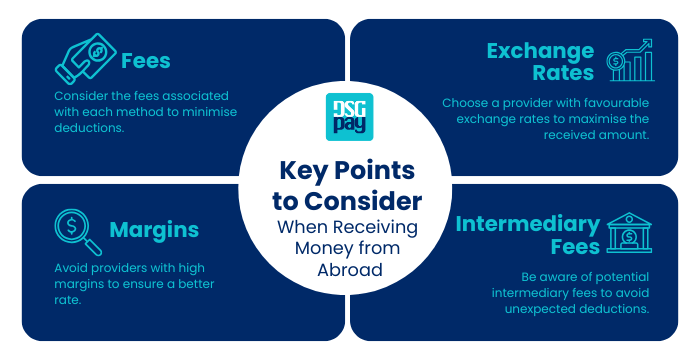
When choosing the best way to receive money from abroad, it’s important to consider several key factors that can affect how much you actually receive.
1. Fees
When choosing the best way to receive money from abroad, you should also consider the fees, foreign exchange rates, and margins that will determine the final amount you get.
2. Foreign Currency Exchange Rates
The foreign exchange rates fluctuate constantly due to a variety of reasons. The method or provider you choose might also offer you different rates. This will affect the amount of money you’ll finally receive. So, the sender should make the international transfer keeping these factors in mind.
3. Margins
Some providers might add a margin to the exchange rate as part of their fee structure. The higher the margin, the less favourable the rate, which means you receive less money.
4. Intermediary and Receiving Fees
The sender might come across additional fees like transaction fees or cancellation fees when transferring funds. Intermediary fees might also be added when, for instance, the funds are sent via the SWIFT network. These fees will be deducted from the total amount, affecting the amount you receive.
DSGPay: Seamless Solution to Receive Money from Abroad
There are several ways available to receive money from abroad. The important step is choosing the right one for your purpose that offers you the best rates and minimal fees.
If you’re running an international business, managing global suppliers as an SME, or working with overseas clients as a freelancer, choosing the right provider becomes all the more important.
DSGPay offers a faster, cost-effective alternative for individuals and businesses receiving international payments.
Here’s what you can do with DSGPay:
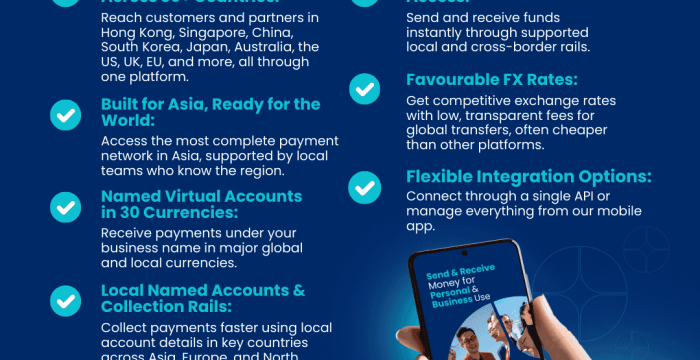
- Receive Like a Local: Get access to Global Named Accounts in key markets such as the US, UK, EU, and more. Your clients or partners worldwide can send you money as if they’re making a local transfer without high intermediary bank fees.
- Hold and Convert 30+ Currencies: Manage incoming payments in multiple currencies like USD, EUR, GBP, AUD, CNY, and more, all from a single platform.
- Competitive Exchange Rates and Transparent Pricing: DSGPay offers real-time rates with no hidden markups, helping you keep more of what you earn.
- No Need for a Local Presence: Open and manage your account fully remotely without visiting a physical branch.
With DSGPay, you can manage your international payments more efficiently, avoiding unnecessary currency conversion fees and taking advantage of favourable exchange rates.
This flexibility not only helps in reducing costs but also enhances your ability to expand your business into new markets.