How to Make Money from Creating an App: Best Monetization Strategies for 2025
Every developer dreams of building an app that becomes a money-making machine. After all, countless hours, sleepless nights, and frustrating test trials went into making it work. But when it comes to figuring out how to make money from creating an app, choosing the right strategy can feel just as challenging as building the app itself.
App development is still one of the most profitable business models out there. However, the competition is fierce. As of January 30, 2025, the Google Play Store had 3.3 million Android apps, while the Apple Store had 2.2 million iOS apps, making it a tough market to break into. To stand out, you need proven strategies that can drive success for your business.
In this article, we’re breaking down six essential app monetization strategies. Some offer quick returns but lower profit margins, while others take more time yet yield higher earnings. Let’s dive in and find the best approach for your app.
Key Takeaways:
- Choose the right monetization strategy based on your app type and target audience.
- Subscription models and in-app purchases offer steady revenue streams.
- Ads can be profitable but should not compromise user experience.
- Continuous updates and user engagement help sustain long-term profitability.
- A reliable and global payment solution ensures smooth transactions and global reach.
Understanding App Monetization
App monetization is how app developers make money from their apps. This can be done in different ways, like selling extra features (in-app purchases), showing ads, offering paid subscriptions, or earning from affiliate links.
Why is App Monetization Important?
Generating a steady income from your app is way harder than most developers expect. Even if your app has millions of downloads, if it’s not making money, it won’t survive for long. That’s why developers focus on monetization. A well-monetized app creates a better experience for both developers and users.
Here’s why it matters:
- Keeps the app running long-term instead of shutting it down due to a lack of funds.
- Monetization covers development, maintenance, and update costs.
- Provides financial stability so developers can focus on improving the app.
- Allows developers to add new features and improve user experience.
- Helps fund marketing efforts to attract more users.
- Helps apps compete in a crowded market and stay relevant.
- Attracts investors and business partners for potential growth.
How Monetization Affects User Experience
If someone opens an app and sees ad after ad, they’ll probably close it and never come back. If they’re asked to pay for a subscription but don’t see the value, they’ll look for a free alternative.
Making money from an app is important, but it shouldn’t make the app frustrating to use. A good balance keeps the business running while making sure users stick around and enjoy the experience.
Important App Monetization Stats You Must Know
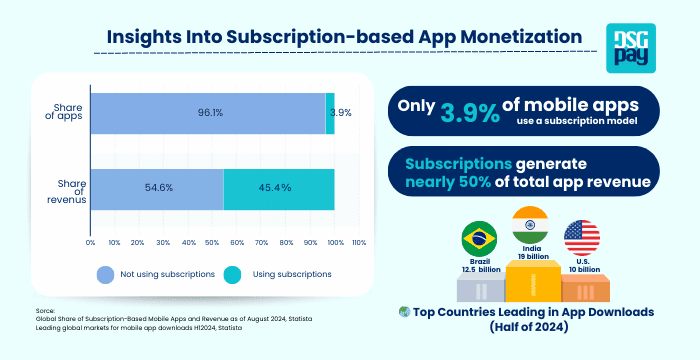
Mobile apps are being downloaded more than ever, which means there’s a huge opportunity for developers to make money. The Statista reports that in the first half of 2024, India led with 19 billion downloads, followed by Brazil with 12.5 billion and the U.S. with 10 billion. More downloads mean more potential users, but capturing their spending power is key.
On average, smartphone users in the U.S. spend 3 hours and 45 minutes daily on mobile apps, as reported by Backlinko, and their willingness to spend is increasing.
In 2023, users spent $171 billion on apps. The mobile app market itself is booming, valued at $289.17 billion in 2024, and expected to surpass $1.1 trillion by 2034, growing at a 21.55% annual rate. This shows that users are willing to pay for apps, whether through in-app purchases, subscriptions, or premium features.
Among these revenue models, subscriptions stand out. While only 3.9% of apps use a subscription model, they bring in nearly half of all app revenue. This means subscriptions can be a smart way to make money if your app offers something valuable.
However, with 3.3 million on Google Play and 1.54 million apps available on Apple App Store , competition is intense. To succeed, developers need a solid monetization strategy, whether through ads, in-app purchases, or subscriptions. Finding the right approach can make all the difference in turning your app into a profitable business.
How to Make Money from Creating an App: 6 Proven Strategies
Each app has its own revenue potential and monetization strategies. Streaming, social media, dating, and gaming apps are among the top earners, each using different methods to generate income.
Let’s break down the most effective monetization models, compare their pros and cons, and find the best fit for your business.
1. In-App Purchases
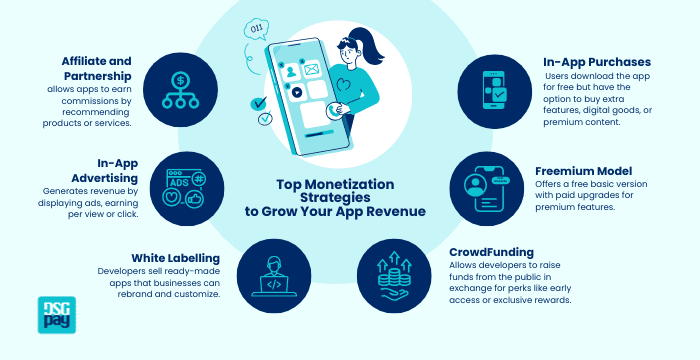
In-app purchases (IAPs) are exactly what they sound like. Users download the app for free but have the option to buy extra features, digital goods, or premium content. This could be anything from game currency and character upgrades to removing ads or unlocking exclusive tools in a productivity app.
Remember, users are more likely to spend when engaged.
Ever played PUBG or Free Fire and spotted someone with an epic outfit or a flashy weapon skin? You tell yourself, “I don’t need it… but wow, it looks so good.” Before you know it, you’re in the in-game store, trying to decide whether to spend a few bucks. That’s in-app purchases at work.
Best For: Gaming apps, dating apps, and education apps.
Pros:
- In-app purchases show user preferences, helping developers improve features and promotions.
- Free apps attract a larger audience.
- Paid content increases engagement and boosts app visibility.
Cons:
- Security risks include unauthorized transactions and fraud.
- Requires a large user base to generate significant revenue.
- Ethical and regulatory concerns, especially with younger audiences.
2. Freemium Model
Who doesn’t love free stuff? Everyone does. The freemium model (a combo of free + premium) gives users access to a basic version of the app for free while offering paid upgrades for premium features.
It works well for subscription-based apps, letting users explore the features before deciding if it’s worth paying for. Instead of one-time purchases, users pay regularly (weekly, monthly, yearly).
A perfect example is Spotify. Users can listen to music for free with ads and limited skips, but upgrading to Spotify Premium removes ads, allows unlimited skips, and enables offline listening. This setup lets users enjoy the app before deciding if the extra perks are worth the price.
For the freemium model to work, premium users need real value; think extra storage, advanced customizations, and priority customer support. Otherwise, why would they upgrade?
Best For: Productivity apps, dating apps, graphic designing apps like Canva, fitness apps, and music streaming apps.
Pros:
- Brings in lots of users since it’s free to try.
- Companies can still make money from ads.
- Helps businesses understand what users like.
- Great for startups to get noticed without spending much on support.
Cons:
- If the free version has too much, no one pays a premium.
- Most free users never upgrade.
3. CrowdFunding
Running low on cash? Crowdfunding might be the way to go. Instead of relying on a single investor, developers present their ideas to the public and get small contributions from many people. In return, supporters get perks like early access or exclusive rewards.
But success isn’t promised. It all comes down to how well you promote your idea and whether people find it interesting.
Some of the most popular crowdfunding platforms are Kickstarter, GoFundMe, and Indiegogo.
Best For: Developers with unique ideas, niche audiences, or social impact apps needing early-stage funding.
Pros:
- Easy to set up.
- No need for loans.
- Gets people interested early.
- Builds a community.
Cons:
- No guarantee of success. Public failure is possible
- Takes time and effort.
- Platforms charge fees.
- Funds may take time to arrive.
- Some people don’t trust crowdfunding.
4. White Labelling
White labelling is a smart way for developers to monetize apps by selling ready-made solutions to businesses. Instead of building an app from scratch, companies get a functional product they can customize with their own branding, tweaking logos, colours, and basic text to match their identity.
This model is especially popular in B2B industries like ride-hailing, food delivery, and marketplace apps, where businesses need a fully operational app without the hassle of development. Beyond branding, companies can also request additional features like live auctions, custom payment gateways, or third-party integrations to better fit their needs.
A great example is Onde, a company that provides white-label apps for ride-hailing and food delivery businesses. They don’t list their prices upfront, which typically means their services are on the pricier side. However, businesses aren’t just paying for the app, they’re also investing in customization and ongoing support, making white labelling a profitable model for developers.
Best For: Agencies, startups, and businesses looking for ready-made apps with custom branding.
Pros:
- You can sell the same app multiple times, making it a cost-effective way to generate revenue.
- Businesses get a ready-made app, saving them time and development costs.
- Extra customization options allow you to charge more for branding and feature upgrades.
- Working with businesses can lead to long-term contracts and stable income.
Cons:
- There’s little room for creativity since you’re selling the same base product repeatedly.
- The market is competitive, so standing out can be challenging.
- Developing a high-quality white-label app requires a big upfront investment.
- If demand in your target industry drops, your business could struggle.
5. In-App Advertising
In-app advertising is a straightforward way to make money from a free app. Instead of charging users, you show them ads. Every time an ad appears on the screen, you earn revenue whether the user clicks it or not.
Apps display ads in different formats, including:
- Banner Ads: Small ads that stay at the top or bottom of the screen. They’re non-intrusive but can be easy to ignore.
- Interstitial Ads: Full-screen ads that appear at natural transition points (e.g., between levels in a game). They have a higher engagement rate but can interrupt the user experience.
- Rewarded Videos: Ads users can choose to watch in exchange for a reward, such as in-game currency or extra lives. These are highly effective because users willingly engage with them.
- Native Ads: Ads are designed to blend in with the app’s content, making them feel less intrusive.
- Playable Ads: Interactive ads that allow users to try a mini-version of another app before downloading it.
Best For: News apps, entertainment apps, and social media apps.
Pros:
- Generates revenue from every user, even those who don’t spend money.
- It works well for free apps and attracts a larger audience.
- Scales easily—more users mean more revenue.
- Easy to implement with ad networks like Google AdMob and Unity Ads.
Cons:
- It can harm user experience if ads are intrusive or excessive.
- Revenue can be unpredictable due to market demand and ad policies.
- Requires a large user base to generate substantial income.
- Ad blockers reduce potential earnings.
6. Affiliate and Partnership
Apps can earn money by recommending products or services and getting a commission when users make a purchase. A fitness app might suggest workout gear, while a finance app could promote credit cards. It’s a great way to make extra income without charging users, but if the recommendations seem spammy or irrelevant, people might stop using the app.
A real example is Rakuten (formerly Ebates), a cashback and shopping rewards app. It partners with retailers and earns a commission when users shop through its links. In return, Rakuten shares a portion of the commission with users as cashback. This model allows Rakuten to generate revenue without charging users.
Best for: Shopping, fitness, finance, travel, and content-based apps with a strong niche and engaged users.
Pros:
- Generates revenue without charging users directly
- Can enhance user experience if recommendations are relevant
- Works well for apps with a strong niche or engaged audience
- Potential for passive income with minimal ongoing effort
Cons:
- Requires high traffic or engagement to be profitable
- Users may lose trust if recommendations seem biased or irrelevant
- Dependent on third-party companies and their commission structures
Why App Monetization Can Be Challenging
Just because people download an app doesn’t mean they’ll spend money on it. Here’s why app monetization can get difficult.
- People Love Free Stuff: Most users expect apps to be free. The moment they see a price tag, they leave. Getting them to pay for anything takes some real convincing.
- Subscriptions Are a Gamble: People love free trials but cancel before paying. Keeping them interested long enough to subscribe is a challenge.
- Too Much Competition: With millions of apps out there, even a great one can get lost. Marketing helps, but it costs money.
- Users Lose Interest Fast: Today’s favourite app can be forgotten tomorrow. Keeping people engaged (and spending) is an ongoing struggle.
- App Stores Take a Big Cut: Google and Apple take a share of in-app purchases and subscriptions, so developers don’t keep all their earnings.
- Piracy and Hacks: Some users find ways to get paid features for free, which means lost revenue for developers.
- Tech Changes Quickly: What works today may become outdated next year, making it essential to stay on top of trends and updates.
How to Overcome These Challenges
- To overcome app monetization challenges, offer a freemium model that provides value upfront while encouraging upgrades.
- Use loyalty rewards and reminders to keep subscribers.
- Optimize for app stores and use influencers and referrals.
- Keep users engaged with updates, new features, and events.
- Explore direct sales and partnerships to reduce app store fees.
- Implement security measures to prevent piracy and hacks.
- Stay updated with industry trends and user feedback.
Remember, making money from an app isn’t just about charging for features. It’s about keeping users happy while still making a profit.
Emerging Trends in App Monetization
As competition grows, apps need smarter ways to make money while keeping users happy. Here are the latest trends shaping app monetization in 2025:
- Smart Pricing with AI: Apps now use AI to adjust prices based on what users like and how they spend money.
- Subscription Bundles: Instead of paying for separate services, users can now get a mix (like music + gaming) in one subscription.
- Fun Spending Tricks: Apps use things like streaks, VIP perks, and challenges to make spending money feel more fun.
- Shopping with AR: Augmented reality lets users try on clothes or see furniture in their homes before buying.
- Crypto & Blockchain Payments: More apps now accept cryptocurrency, making payments faster and easier worldwide.
- Smarter Ads: AI helps apps show ads that match users’ interests without being annoying.
- Community Support: Users can now tip creators, buy exclusive content, or support their favourite influencers directly.
- Metaverse Monetization: Virtual goods, NFTs, and digital real estate are becoming new ways for apps to generate revenue.
Keeping up with these trends can help apps stay profitable while offering better user experiences!
FAQs: How to Make Money from Creating an App
Q: What is the most profitable way to monetize an app?
A hybrid model (ads + in-app purchases + subscriptions) often maximizes revenue.
Q: How do free apps make money without ads?
Freemium models, data monetization, and affiliate marketing are common alternatives.
Q: What are the biggest mistakes in app monetization?
- Overloading with ads
- Ignoring user experience
- Choosing the wrong model for the audience
Q: Can small apps compete with large-scale monetization models?
Yes! Niche apps with dedicated audiences can be very profitable through subscriptions and sponsorships.
Receive App Revenue Payouts in Multiple Currencies via DSGPay Virtual Accounts
As an app developer, receiving payments from platforms like the App Store and Google Play can be challenging, especially if you don’t have a U.S. or supported local bank account. High fees, slow international transfers, and complex payout processes can make it difficult to access your earnings.
With DSGPay’s virtual accounts, you can receive payouts in multiple currencies, including USD, EUR, GBP, HKD, SGD, and more, from app stores, ACH, and wire transfers seamlessly without needing a U.S. or local bank account.
How to Receive App Revenue Payouts with DSGPay
- Register on DSGPay: Download the DSGPay app, sign up, complete your profile, and submit verification documents (passport, national ID, or business registration). Approval takes a few hours to 1-2 business days.
- Get Your DSGPay Virtual Bank Details: Once verified, access your virtual bank account details in the DSGPay dashboard, including bank name, account number, clearing code (if applicable), and supported currency (USD, EUR, GBP, HKD, SGD, etc.).
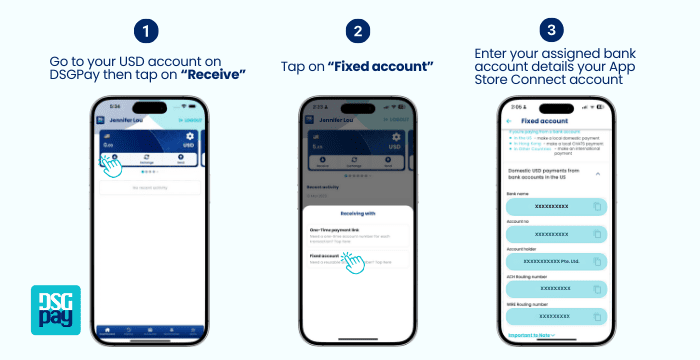
- Add DSGPay to App Store Connect: Log in to App Store Connect, go to Payments and Financial Reports, and select Add New Bank Account. Choose the country and currency that match your DSGPay account, then enter your account number and clearing code. Save and wait for Apple’s verification.
- Start Receiving Payouts: Once verified, App Store earnings will be deposited into your DSGPay virtual account in your chosen currency. Withdraw funds via ACH, wire transfer, or other supported payout methods with low fees and competitive exchange rates, all without needing a U.S. or local bank account.
Why Choose DSGPay
- No Local Bank Account Needed: Get paid directly from Google Play, App Store, and other platforms into your DSGPay virtual account.
- Receive Payouts in Multiple Currencies: Accept payments in USD, EUR, GBP, HKD, SGD, and more, giving you full flexibility.
- ACH & Wire Transfers Made Easy: Withdraw earnings via ACH and wire transfer with low fees and competitive exchange rates.
- Cross-Border Transactions: Move your money quickly and securely without delays from traditional banks.
- Transparent Pricing: No hidden fees, just fair rates so you keep more of your earnings.
- Regulatory Compliance: DSGPay is fully compliant with international payment regulations for secure transactions.
- Simple & Scalable Integration: Whether you’re an indie developer or running a global app business, DSGPay makes receiving payments hassle-free.
Conclusion: Turning Your App into a Profitable Business
Monetizing an app isn’t just about picking a revenue model, it’s about finding the right balance between profitability and user experience. Whether you choose in-app purchases, subscriptions, ads, or partnerships, success comes from understanding your audience, providing real value, and continuously adapting to industry trends.
With millions of apps competing for attention, standing out requires more than just a great idea, it demands strategic execution, strong engagement, and a reliable payment solution to ensure smooth revenue flow.
By implementing the right monetization strategy and leveraging global payment solutions like DSGPay, you can maximize your earnings and scale your app business worldwide. Now’s the time to put these strategies into action and turn your app into a thriving source of income.