
Opening a business in Indonesia is becoming increasingly attractive in 2025. With a population of 285 million and steady 4.9% GDP growth, the country offers one of the strongest and most resilient consumer markets in Southeast Asia.
On top of that, recent regulatory changes have made it easier for both local entrepreneurs and foreign founders to enter the market.
If you are planning to open a business there, this guide walks you through every step of the process in 2025, from choosing the right structure to meeting capital rules, securing licences, and staying fully compliant.
Table of Contents
Key Takeaways
- The Positive Investment List and risk-based licensing system make it easier for foreign investors to understand ownership rules and licensing requirements before entering.
- Choosing the right structure matters. Investors typically pick between a PT PMA, Local PT, or Representative Office, each offering different levels of control, cost, and operational freedom.
- Opening a company follows a clear process: reserve a name, select KBLI codes, notarise documents, obtain approvals, register through OSS, open a bank account, and secure any sector-specific licences.
- Once established, businesses must meet ongoing tax and compliance obligations. Staying compliant keeps operations smooth and avoids penalties.
Understanding the Investment Landscape Before Opening a Business in Indonesia
Before opening a business in Indonesia, it helps to understand the country’s risk-based licensing system. Each business activity is assigned a risk level that determines how simple or detailed your approval process will be.
How the system works
- Low risk: Basic registration and minimal documents.
- Medium risk: Additional checks to confirm standards.
- High risk: Certified evidence, technical approvals and ongoing compliance.
Knowing your risk category early helps you plan your setup timeline with confidence.
A second key step is confirming whether your sector is fully open to foreign ownership. This is defined through the Positive Investment List, which outlines which activities allow 100% foreign ownership and which come with conditions.
Many modern, priority industries are completely open to foreign investors, while others require a partnership with local Micro, Small and Medium Enterprises (MSMEs) or come with ownership caps.
Matching your planned activities with the correct Klasifikasi Baku Lapangan Usaha Indonesia (KBLI) code ensures you stay aligned with the rules and avoid delays later in the process.
Foreign Ownership Overview in Indonesia
| Category | Foreign Ownership | Examples of Sectors |
| Sectors with limits | Usually 20–49% | – Broadcasting – Newspapers – Air transport – Postal services – Horticulture |
| Sectors requiring MSME partnership | Allowed with a partnership | – Traditional crafts – Food processing – Small-scale manufacturing |
| Fully open sectors | 100% allowed | – Oil and gas services – Power generation – Ports – Airports – Telecommunications – E-commerce – Hospitals |
| Closed sectors | Not allowed | – Narcotics – Gambling – Endangered wildlife trade – Coral extraction – Chemical weapons – Alcoholic beverage production |
Choose the Right Business Structure First
Before any registration begins, decide which structure aligns with how you plan to operate in Indonesia.
Indonesia offers three main structures: PT PMA, Local PT, and a Representative Office. Each one fits a different stage of market entry.
This choice determines whether you can run commercial activities, how much capital you must commit, and how quickly you can launch.
PT PMA vs Local PT vs Representative Office: A Quick Overview
| Criteria | PT PMA (Foreign-Owned Company) | Local PT (Indonesian-Owned Company) | Representative Office (RO) |
|---|---|---|---|
| Ownership | Up to 100% foreign ownership (eligible sectors) | Must be fully Indonesian-owned | 100% foreign ownership allowed |
| Activities Allowed | Full commercial operations – trading, invoicing, hiring, importing, exporting | Full commercial operations | Non-commercial only – research, supervision, promotion |
| Minimum Capital | – IDR 2.5 billion paid-up capital – IDR 10 billion investment plan per KBLI |
– Small: IDR 50 m – 500 m – Medium: IDR 500 m – 10 b – Large: 10 b + |
No capital required |
| Ideal For | Foreign investors planning long-term commercial operations | Local founders or foreign-local joint structures | Market testing and coordination functions |
| Typical Timeline | 2 – 4 months | 1 – 2 weeks | 2 – 4 weeks |
1. PT PMA (Foreign-Owned Limited Liability Company)
A PT PMA is the standard route for foreign investors who want full commercial capability. You can generate revenue, hire employees, sign contracts, import goods, and operate independently across Indonesia.
From 2025, you must have a minimum paid-up capital of IDR 2.5 billion, held in the company for at least 12 months. Some industries set higher capital thresholds, so it is worth checking your specific sector before you proceed.
This is the structure to choose when you are ready to commit and scale.
Pros:
- Allows up to 100% foreign ownership in eligible sectors.
- Can own land through HGB (Right to Build).
- Can sponsor KITAS work permits for foreign staff.
- Eligible for tax incentives and reduced import duties.
- Full operational control with limited liability protection.
Cons:
- Minimum IDR 10 billion total investment plan per KBLI.
- More complex compliance and reporting.
- Higher establishment and operational costs.
2. Local PT (Indonesian-Owned Limited Liability Company)
A Local PT is quicker and cheaper to form, with capital requirements starting around IDR 50 million. However, the company must be 100% owned by Indonesian shareholders. This option works only when you have a trusted local partner or when your sector restricts foreign ownership under the Positive Investment List. It offers full commercial capability but less control for foreign founders.
Pros:
- Fast and straightforward registration.
- Lower capital requirements.
- Full commercial operating rights.
- Limited liability protection.
Cons:
- No foreign shareholding allowed.
- Potential governance friction between directors and commissioners.
- Subject to double taxation on profits and dividends.
3. Representative Office (RO)
A representative office is the lightest entry point. It cannot issue invoices or earn revenue, but it can oversee sourcing, conduct market research, and coordinate with local partners. It requires no paid-up capital and has the fastest setup timeline. This option suits businesses exploring the market before deciding on a long-term commercial presence.
Pros:
- No paid-up capital requirement.
- 100% foreign ownership allowed.
- Low administrative and tax burden.
Cons:
- Cannot issue invoices or generate revenue.
- Cannot sign commercial contracts.
- Limited operational scope.
- Not a profit-making legal entity.
Step-by-Step Process: Opening a Business in Indonesia
Setting up a company in Indonesia becomes far easier once you follow the sequence. Each structure, PT PMA, Local PT, or a representative office, runs through similar checkpoints, with a few differences around capital, licensing, and how quickly you can start operating.
Step 1: Reserve a Unique Company Name
The first administrative step is choosing and securing your company name.
PT PMA and Local PT structures
- The name must meet certain rules before it can be approved through the Ministry of Law and Human Rights (AHU system).
- Key requirements:
- Must contain three words.
- Must use Latin characters.
- Must be different from all existing registered names.
- Submitted and checked through the AHU online system.
Representative offices usually follow the parent company’s name, making their approval process simpler.
Step 2: Select the Correct KBLI Codes
Your KBLI code shows what your business is allowed to do in Indonesia and sets your risk category in the OSS RBA system.
It also affects which licences you must apply for.
Your declared activities must match the correct KBLI code for a PT PMA, Local PT or a Representative office.
Step 3: Draft the Deed of Establishment with a Notary
For PT PMA and Local PT companies, a licensed notary prepares the Deed of Establishment and the Articles of Association. These documents outline how the company is structured and how it will operate.
They include:
- Ownership details
- Capital structure
- Management roles
- Approved business activities
Representative offices do not need these documents. They submit paperwork from the parent company and a Letter of Appointment naming the Chief Representative and their authority.
Step 4: Obtain Legal Entity Approval
The SK Pengesahan is issued after the deed is submitted and officially makes a PT PMA or Local PT a legal company in Indonesia.
It confirms the company’s legal status and allows it to operate under Indonesian law. It also enables the company to complete required tax and OSS registrations.
Representative Offices do not receive an SK Pengesahan because they are not separate legal entities and instead register directly through OSS.
Step 5: Obtain NPWP (Tax ID)
Every business must have a company Nomor Pokok Wajib Pajak (NPWP) for tax and administrative purposes. PT PMA, Local PT and Representative offices all rely on it for basic operations.
The NPWP is needed for:
- Opening a corporate bank account
- Registering for VAT
- Filing monthly and annual taxes
- Paying employees
- Renting office space
Having one director or authorised representative with a personal NPWP helps speed up the process.
Step 6: Secure a Domicile Letter (Where Required)
Many areas still require a domicile letter to confirm the company’s registered address. The Jakarta provincial government has removed it for most cases under OSS, but banks may still ask for it when opening an account.
This can apply to PT PMA, Local PT and Representative Offices, depending on local rules.
Step 7: Register on OSS to Obtain Your NIB
Every business must obtain a Business Identification Number (NIB) through OSS RBA.
For PT PMA and Local PT, the NIB serves as the company’s main ID.
Representative offices also get an NIB along with their specific RO licence.
The NIB includes:
- Main company ID.
- Import and customs access.
- Automatic BPJS enrolment.
- RO licence (KPPA, KP3A or BUJKA).
Step 8: Meet Risk-Based Licensing Requirements
Indonesia’s risk-based system sets how much approval a business needs.
- Low-risk businesses only need an NIB.
- Medium-risk activities require an NIB + Standard Certificate.
- High-risk sectors need an NIB + full licences and verification.
- PT PMA and Local PT follow these rules.
- Representative Offices use a simpler RO licence because they do not run commercial activities.
Step 9: Open a Corporate Bank Account
- Banks require specific documents to open a corporate account.
- PT PMA and Local PT usually need the authorised signatory to attend in person.
- Representative Offices must also provide documents from the parent company.
- Some banks may still ask for a domicile letter even if OSS no longer requires it.
Step 10: Inject Capital Where Required
- PT PMA must place IDR 2.5 billion in paid-up capital and keep it for 12 months.
- Local PTs usually start from around IDR 50 million, depending on business size.
- Representative Offices have no capital requirement.
- Proof of funds may be checked by banks, BKPM or OSS.
Step 11: Apply for Sector-Specific Licences
Some industries need extra approvals before you can operate. This applies to sectors that involve higher risk or specialised regulations, so starting early helps avoid delays.
Industries that require extra licences include:
- Mining
- Oil and gas
- Fintech
- Trading activities
- Healthcare
- Construction
- Education
Cost Breakdown for Opening a Business in Indonesia
Setting up a business in Indonesia comes with several mandatory and optional costs, and understanding them early helps you budget accurately and avoid surprises during registration.
| Cost Category | Local PT | PT PMA | Details |
|---|---|---|---|
| Notary fees | IDR 5–15 million | IDR 5–15 million | Covers deed drafting and company incorporation |
| Deed of Establishment | IDR 2–10 million | IDR 2–10 million | Articles of Association preparation |
| Government registration fees | IDR 1–5 million | IDR 1–5 million | Includes Ministry filings and OSS charges |
| Legalisation (Ministry of Law) | IDR 1–3 million | IDR 1–3 million | Confirms legal entity status |
| Professional service fees | Varies | Varies | From basic assistance to full consulting packages |
| Company seal and documents | USD 100–500 | USD 100–500 | One-time operational documentation |
| Sector-specific licences | Varies | Varies | Required for regulated industries |
| Minimum paid-up capital | From IDR 50 million | IDR 2.5 billion (2025 update) | PMA capital must stay in the account for 12 months |
| Investment plan requirement | Not required | Typically matches paid-up capital | Reported via OSS |
| Ongoing compliance (tax, BPJS, accounting) | Varies | Higher for PMA | Monthly and annual reporting obligations |
Tax Obligations for New Businesses
Once your business starts operating, you need to stay compliant with Indonesia’s tax rules.
1. PT (Local Company)
Local PTs in Indonesia must follow these basic tax rules:
- 22% corporate income tax on net taxable profit.
- 0.5% final tax available for small PTs with revenue below IDR 4.8 billion (first 3 years, depending on company size classification).
- Effective 11% reduced rate for SMEs with turnover up to IDR 50 billion (applies to part of the income).
- 19% corporate income tax is available for qualifying publicly listed companies that meet the minimum 40% public shareholding requirement.
- 11% VAT, with mandatory VAT registration once turnover exceeds IDR 4.8 billion.
- Withholding tax on payments such as salaries, services, rent and payments to foreign parties.
- Employee income tax (PPh 21) is withheld by the employer using progressive rates from 5% to 35%.
2. PT PMA (Foreign-Owned Company)
A PT PMA uses a phased tax system:
- 22% corporate income tax on net profit.
- 19% corporate income tax rate available for qualifying publicly listed companies that meet the 40% public shareholding and other conditions.
- 11% VAT and mandatory VAT registration once turnover exceeds IDR 4.8 billion.
- Withholding tax on payments such as salaries, services, rent and payments to foreign parties.
3. Representative Office (RO)
An RO has much lighter tax obligations because it cannot sell or earn revenue.
- A representative office cannot sell, invoice, or earn revenue in Indonesia.
- It must still register for tax, manage withholding tax for employees and local vendors, and pay 11% VAT on goods and services it buys.
- If an RO performs activities that resemble doing business, such as selling or negotiating deals, it may be treated as a permanent establishment, which places it under normal corporate tax rules.
Common Mistakes Investors Make When Opening a Business in Indonesia
Many delays and compliance issues in Indonesia come from avoidable oversights. Here are the mistakes new investors run into most often and how they affect the setup process.
- Choosing the wrong KBLI code often leads to licence rejections and forces you to revise your entire registration.
- Ignoring Positive Investment List restrictions can result in blocked applications or forced ownership changes.
- Withdrawing PT PMA capital early may trigger compliance issues and put your licence at risk.
- Underestimating sector-specific licence timelines can extend your launch timeline and delay operations.
- Assuming a representative office can make sales or issue invoices often results in regulatory violations.
- Missing monthly or annual tax filings can lead to fines and potential audits.
- Not preparing bank-required documents slows down account opening and disrupts early financial activities.
- Using a residential address for registration often prevents system verification and requires you to repeat the address approval process.
Conclusion: Is Indonesia Worth Entering in 2025?
Opening a business in Indonesia in 2025 offers a clear upside. The market is growing, regulations are more predictable, and foreign investors have more freedom than ever, thanks to risk-based licensing and a more open investment list.
With the right structure, compliance approach, and operational tools, entering Indonesia in 2025 can be a strategic move that pays off over the long term.
DSGPay: A Smarter Way to Manage Cross-Border Payments for New Businesses in Indonesia
Once your PT PMA or representative office is operational, international payments quickly become part of your daily workflow.
DSGPay helps new companies manage these transactions smoothly by offering a faster, more flexible alternative during the early months of setup.
How DSGPay Supports Growing Businesses:
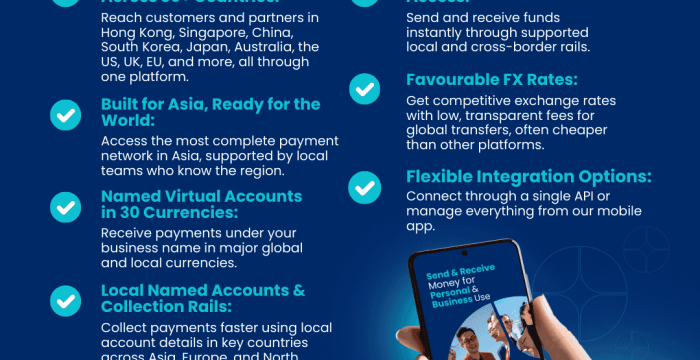
- Receive Global Currencies Through Named Virtual Accounts: Get virtual accounts issued in your company’s name, allowing you to receive payments under your own brand across major markets.
- Support for 30+ Currencies: Hold, send, and receive money in over 30 currencies, including USD, EUR, GBP, AUD, KRW, AED, HKD, SGD, and others.
- Make Cross-Border Transfers Without Needing Local Bank Accounts: Use DSGPay’s network of local rails and virtual IBANs to move funds faster internationally.
- Get Better FX Rates With Lower Fees: Convert currencies instantly using transparent and competitive FX rates.
- Integrate Easily With APIs and Dashboard Tools: Automate your payment operations with API connectivity, or manage everything through a user-friendly dashboard with real-time tracking and clear reporting.
- Built on Licensed, Secure Infrastructure: DSGPay operates under a Hong Kong license and partners with trusted financial institutions, giving your business a secure, compliant foundation for global payments.
Contact us today to learn more about how DSGPay supports businesses operating in Indonesia.